How to Use Lubriderm Lotion for Tattoos Step by Step
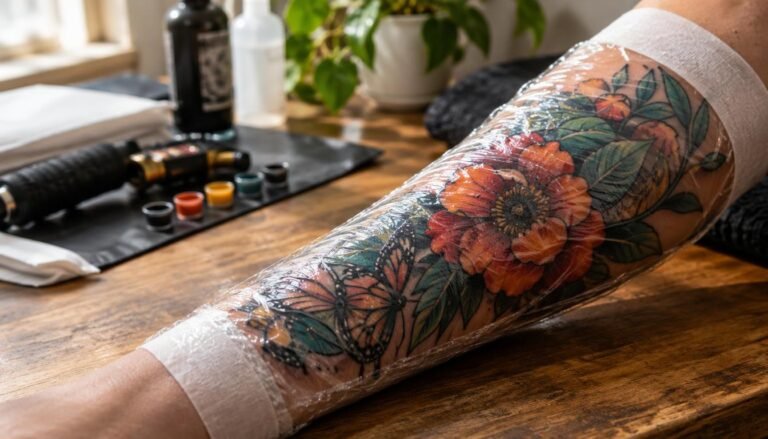
Lubriderm Daily Moisture Lotion Fragrance-Free is for the lotion stage, not automatically the first product used on a fresh tattoo. A new tattoo needs gentle care, and the first days can look different from one person to another. Follow your tattoo artist’s instructions because timing depends on the tattoo and your healing process.
A thin layer is a small amount spread so it absorbs without leaving a visible wet or shiny coating. If you have sensitive skin, careful product choice matters. This guide explains when to start using lotion, how to apply it, and when to seek help if healing does not seem right.

Key Takeaways
- Use lotion during the lotion stage, not automatically on day one.
- Follow your tattoo artist’s directions about when to switch products.
- Choose the fragrance-free Daily Moisture formula for this stage.
- Apply a small amount to clean, dry skin.
- Get medical advice if concerning symptoms develop.
Start by checking whether the tattoo is ready for lotion and which product fits that stage.
When Can You Start Using Lubriderm Lotion for Tattoos?
Wait until initial oozing and tenderness settle before using lotion, unless your tattoo artist gives different instructions. Readiness matters more than the calendar, and the day count is only a guide. Many people use ointment or balm for the first three to five days, then move to light lotion around day five.
Switch to lotion only after initial oozing and tenderness settle, and follow your tattoo artist’s timing over a general day count.
Your new tattoo may not follow an average schedule. If the area is still weeping or unusually tender, keep following your artist’s aftercare plan rather than switching just because a certain day has arrived.
Choose the Fragrance-Free Daily Moisture Formula
Lubriderm Daily Moisture Lotion Fragrance-Free is a lightweight option for the lotion stage. The daily moisture lotion offers hydration without the heavier feel of an ointment. For tattoo aftercare products, check the full label: different Lubriderm formulas may have different ingredients and textures.
A Lubriderm lotion review should focus on the exact bottle, not just the brand name. The Lubriderm lotion benefits for this stage include a lightweight feel and a fragrance-free formula. “Unscented” does not always mean fragrance-free, so check the ingredients for “fragrance” or “parfum.”
If you are asking which Lubriderm lotion is best, choose the Daily Moisture Lotion Fragrance-Free formula for the lotion stage. “Lubriderm daily moisture” can refer to a product line, so confirm the full name and label. The moisture lotion fragrance-free option is the one intended here, not every lotion from the brand.
Use Ointment First if the Tattoo Is Still Weeping
Ointment or balm can suit the early, open or weeping stage when your artist recommends it. A light fragrance-free lotion fits after that stage settles. Pure petroleum jelly can trap too much moisture, so it is too occlusive for extended tattoo aftercare.
| Product type | When it fits | Guidance |
|---|---|---|
| Ointment or balm | First three to five days | Use if your artist advises it during early healing |
| Fragrance-free lotion | Around day five through full healing | Start after oozing and tenderness settle |
| Pure petroleum jelly | Not for extended aftercare | Too occlusive for prolonged use |
These time ranges are general tattoo aftercare guidance, not a deadline. If your artist has given you a different plan, use that direction. Once the right product and timing are clear, you can follow a simple application routine.
How to Apply Lubriderm to a Healing Tattoo Step by Step
Start with the hygiene step that prevents transferring dirt or bacteria: wash your hands before touching the tattoo. Clean hands come first, and two to three lotion applications daily is a practical baseline. Adjust that frequency to your artist’s directions and your skin’s needs.
Wash and Dry the Skin Gently
Keep the tattoo clean before applying lotion. Gently washing a new tattoo two to three times a day is a common approach during healing. Use lukewarm water and mild, unscented soap, and avoid scrubbing the tattoo or using rough cloths.
Dry the area with a clean paper towel, or let it air-dry. A regular bath towel can rub the tattoo, so use a fresh paper towel instead. The surface should be dry before lotion goes on, not damp with water.
- Wash your hands with soap and water before touching the tattoo.
- Gently clean the tattoo with lukewarm water and mild unscented soap.
- Pat it dry with a clean paper towel or let it air-dry.
- Smooth on a small amount without rubbing hard.
- Let the lotion absorb, then reassess how the skin feels and looks.
Spread a Thin Layer and Check the Finish
Use a small amount and spread it gently across the tattoo. Add more only if the skin still feels dry after the first amount absorbs. For a practical frequency, use lotion two to three times daily, or follow a different schedule from your artist.
The normal finish should feel comfortable and hydrated, not slick or coated. A thin layer should absorb without leaving a visible wet or shiny coating. If you searched “two three times,” treat that phrase as two to three applications per day, not two separate layers at once.
Check for these signs that you used too much:
- Persistent shine after the lotion has had time to absorb.
- A wet or sticky coating across the tattoo.
- Lotion collecting at the edges of the tattoo.
Where can I buy Lubriderm lotion? It is widely available at pharmacies; check the exact fragrance-free label before choosing a bottle. Do not assume Lubriderm Cream has the same formula or feel as the fragrance-free lotion. Read its label before use, especially if you have sensitive skin.
Careful application is only one part of healing. The habits you follow around the tattoo also matter, as do changes that may call for professional help.
What to Avoid While Your Tattoo Heals
Light scabbing and peeling are common during healing, but pulling at a flake can disturb the skin underneath. Let loose skin fall away on its own, because picking or scratching can affect how the tattoo heals. A little patience can help protect the tattoo’s surface and color.
Leave Scabs and Peeling Skin Alone
If the area itches, gently tap around it or place a cool compress over clothing. Do not scratch, peel, or pick at scabs. Those actions can reopen healing skin and raise the chance of irritation or bacteria entering the area.
Avoid soaking a new tattoo for at least a month. That means skipping baths, pools, hot tubs, lakes, and oceans during the initial healing period. Quick showers are fine, but do not let a long soak soften the skin or scabs.
Wear loose, clean, breathable clothing to limit rubbing. If clothing becomes damp from sweat or water, change into dry clothes. Friction and trapped dampness can make the area uncomfortable while the skin is still healing.

Know When Symptoms Need Medical Attention
Some tenderness can happen during healing, but symptoms that worsen deserve attention. Contact a healthcare professional if you notice any of these warning signs:
- Redness or swelling that is increasing or spreading.
- Pain that is getting worse instead of easing.
- Thick yellow or green discharge, or a foul smell.
- Red streaks extending away from the tattoo.
- Fever, chills, or feeling unwell.
Do not try to cover up a concerning reaction by adding more lotion. Stop using a product if it causes a rash or significant irritation, and seek professional advice. Your skin may react differently from someone else’s, even to a familiar product.
If you need a Lubriderm alternative for tattoos, consider a fragrance-free product from Cetaphil, CeraVe, or Aveeno, or a purpose-made fragrance-free tattoo lotion. Check the label and stop using any option that irritates your skin.
Once active healing is over, the focus shifts from protecting fresh skin to caring for fully healed tattooed skin.
How to Care for Healed Tattooed Skin
The outer skin layer usually heals in about two to four weeks, while deeper skin can take several additional weeks to repair. Visible healing is not the whole process, and active moisturizing may continue for four to six weeks. Keep following your artist’s advice during that healing period.
The surface may look healed before deeper skin has finished repairing, so keep following aftercare guidance for the full healing period.
Active aftercare can continue after peeling and surface tenderness have stopped. How long depends on your healing and your artist’s directions. Keep moisturizing as needed through the four-to-six-week period, rather than treating a smooth-looking surface as proof that deeper repair is complete.

Keep a new tattoo out of direct sun while it heals. Wait until it is fully healed before applying sunscreen to the tattoo itself. For exposed tattooed skin, choose a sunscreen labeled broad-spectrum, which means it protects against UVA and UVB rays, with SPF 30 or higher.
Do not assume a product called Lubriderm SPF 50 provides the protection you need without checking its label. Choose a product explicitly labeled broad-spectrum with SPF 30 or higher for fully healed skin. Follow the sunscreen label for application and reapplication directions.
After healing, daily moisture can help keep tattooed skin comfortable. Use a moisturizer that suits your skin, and choose loose clothing when rubbing from a waistband, sleeve, or strap becomes an issue. You do not need to keep treating healed skin like a fresh tattoo.
Aftercare changes as the tattoo moves from healing to maintenance. Keep the artist’s timing in mind, then make sun protection and regular moisturizing part of caring for fully healed skin.
Conclusion
Use the right fragrance-free product at the right stage: Lubriderm Daily Moisture Lotion Fragrance-Free belongs after initial oozing settles and your artist’s instructions allow it. Apply only a thin layer to clean, dry skin, and do not add more just to keep the tattoo looking shiny.
Before your next application, check the bottle’s full label and your tattoo artist’s directions. Follow that aftercare plan, and contact a healthcare professional if concerning symptoms appear.
FAQ
Is it better to use lotion or Aquaphor on a new tattoo?
Ointment such as Aquaphor generally fits the initial open or weeping stage, while light fragrance-free lotion fits after that stage settles. Follow your tattoo artist’s instructions about when to switch. Do not use the calendar alone to decide: if the tattoo is still oozing or unusually tender, check with your artist before changing products.
Does Lubriderm lotion expire?
Yes, Lubriderm lotion can expire, so check the printed date or the period-after-opening symbol on the container. Do not use it past the labeled date, especially on healing skin. Discard the product if its smell, appearance, or texture has changed, even when the printed date has not passed.
Is Lubriderm okay for tattoos?
Yes, Lubriderm Daily Moisture Lotion Fragrance-Free can be used during the lotion stage after initial oozing settles. Use a thin layer and follow your tattoo artist’s advice about timing. Check that the bottle is the fragrance-free formula, since products under the same brand can have different formulas and textures.
Can I use 10 year old lotion?
No, discard lotion that is 10 years old rather than applying it to a tattoo. Over time, a product can degrade or become contaminated, and its original texture and ingredients may no longer be reliable. Choose an in-date bottle with an unchanged smell, color, and texture instead.
What should I do with expired lotion?
Do not apply expired lotion to healing skin. Check the container for disposal directions, then follow local household-waste guidance if it does not provide instructions. Keep the bottle closed until disposal, and do not transfer its contents into another container for later use.
Is 3 months past expiration still good?
Do not rely on lotion that is three months past its expiration date for a healing tattoo. Its safety or effectiveness may have changed, even if the product looks normal. Discard it and use an in-date fragrance-free lotion that matches your artist’s aftercare directions.
How can I tell if my lotion is expired?
Check the printed expiration date or the open-jar symbol, which shows a period-after-opening limit. Discard the lotion if its date has passed or its smell, color, or texture has changed. If the label is hard to read or you are unsure how long it has been open, do not use it on healing skin.