Tattoo Aftercare Guide: How to Care for Your New Ink
A fresh piece of ink can be exciting, and it is normal to feel unsure about what to do next. A tattoo changes the skin, so careful home care supports the healing process and helps you know what to expect over time. Your tattoo artist’s instructions and each product’s directions come first because the covering and your skin may need specific care. This tattoo aftercare guide offers practical steps, not a substitute for professional medical care. Begin by following the covering instructions you received at the studio.

Key Takeaways
- Follow the tattoo artist’s instructions for your specific dressing.
- Wash gently with clean hands and mild, fragrance-free soap.
- Use a thin layer of moisturizer, not a heavy coating.
- Keep healing skin away from soaking, direct sun, and picking.
- Ask a healthcare professional about worsening or persistent symptoms.
What to Do Before You Leave the Tattoo Studio
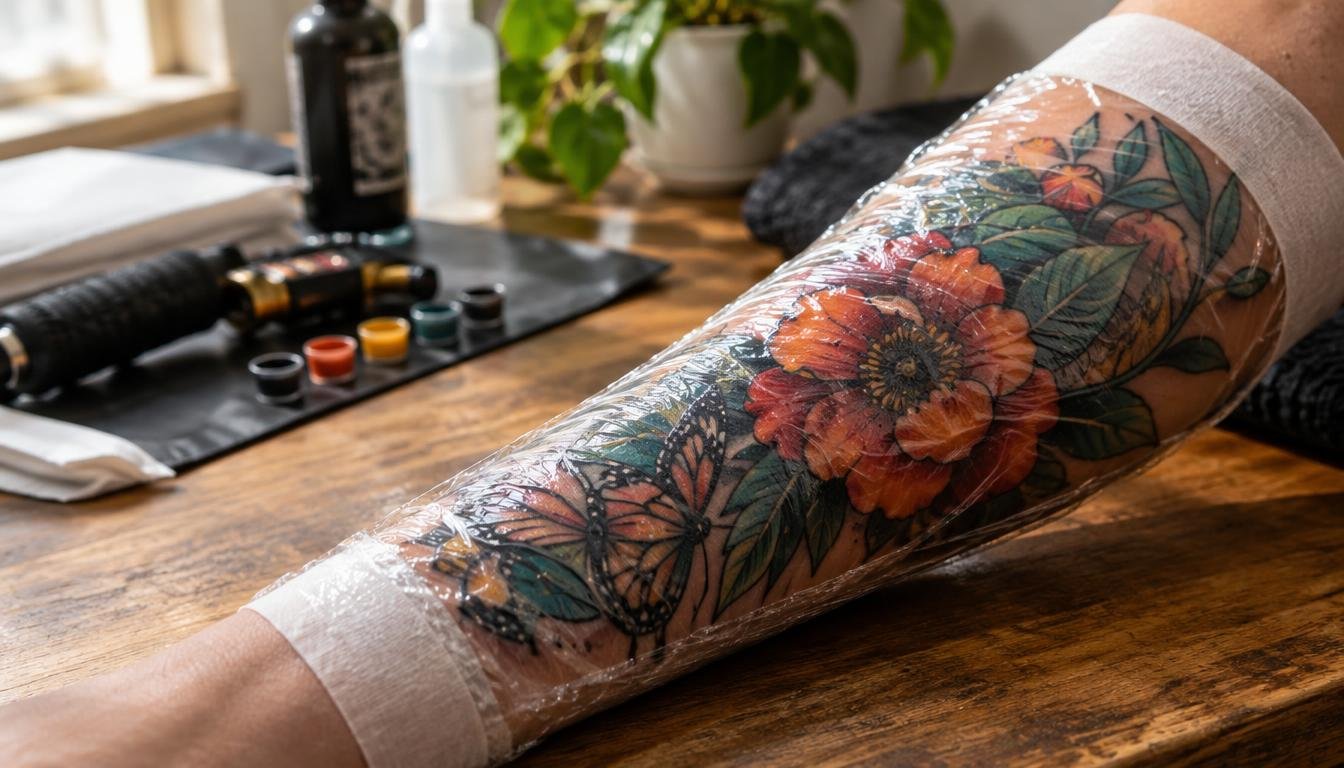
As you leave the studio, first check how long your specific dressing should stay on. A medical-grade adhesive film is a transparent adhesive dressing designed to remain over a tattoo for several days. Your covering type matters, so confirm the removal time with your tattoo artist before heading home.
The tattoo artist cleans the area and applies a dressing to protect fresh ink. Wear times differ by dressing: plastic wrap usually stays on a few hours, while a standard bandage should stay on at least three hours. A medical-grade adhesive film may stay on up to three to four days only if your tattoo artist confirms that timing.
Follow the wear time your tattoo artist gives you: medical-grade adhesive film may stay on up to three to four days only with the artist’s confirmation.
| Dressing type | Typical time on | Key handling point |
|---|---|---|
| Plastic wrap | A few hours | Remove gently at the time your tattoo artist specifies. |
| Gauze or standard bandage | At least three hours | Follow artist instructions and loosen it gently. |
| Medical-grade adhesive film | Up to three to four days with artist confirmation | Follow the artist’s timing; remove gently. |
Confirm the dressing and removal instructions
Before you leave, ask which dressing you have, when to remove it, and what to do if it sticks. Some clients look for tattoo aftercare instructions with second skin, but the label does not replace your tattoo artist’s advice. If this is your first tattoo, ask questions now; a tattoo aftercare guide first time checklist starts with knowing your own covering plan.
Know what to do if the dressing leaks or comes loose
A loose or leaking film can no longer protect the area as intended. Contact your tattoo artist for next steps rather than improvising with another covering. When removal is due, use this short checklist:
- Wash hands thoroughly before touching the dressing.
- Loosen the dressing gently.
- Avoid pulling or tearing it away.
- If film sticks or leaks, follow your tattoo artist’s specific instructions.
Once the dressing is off, the first wash is the next step in your aftercare.
Tattoo Aftercare Guide for the First 48 Hours
The safest first wash uses clean hands, lukewarm water, and mild, fragrance-free soap. Keep the touch gentle as you wash tattooed skin, rather than rubbing at residue. Wash your hands thoroughly before touching the fresh area, then clean it with your fingertips.
Use clean fingers to move a small amount of soap over the tattoo. Rinse away blood, plasma, and excess ink with lukewarm water. An antibacterial soap is not automatically better; choose a mild, fragrance-free liquid soap that does not irritate your skin.
A little ink or fluid in the sink can be part of early healing. Do not scrub, use a washcloth, or reach for harsh or exfoliating soaps. Those habits can irritate the area and interfere with a calm healing process.
Pat the tattoo dry with a clean paper towel instead of rubbing it with a bath towel. During the first two weeks, gently wash twice a day. A quick shower is fine, but do not scrub the tattoo or soak it in water.
If the skin is too tender to touch comfortably, keep contact light and ask your tattoo artist for personalized guidance. Scrubbing harder will not make it cleaner. Follow the care instructions you received, and pay attention to how your own skin responds.
Once the area is clean and dry, a small amount of moisturizer can help prevent excessive dryness.
What the Tattoo Healing Timeline Can Look Like
Healing changes from day to day, and a tattoo may look cloudier before it looks settled. That shift can be ordinary as the surface renews itself. The timeline below is a practical guide, not a promise that every tattoo follows the same schedule.
Days 1-3: redness, soreness, and fluid
In the first few days, some redness, soreness, and a small amount of fluid can occur. The tattoo may look bright or wet at first, then seem cloudy as the surface changes. These signs should generally begin to settle, not steadily intensify.
Size and intricacy affect healing time. A smaller tattoo may heal in two to three weeks, while a larger piece can take up to three months. Placement and individual skin response also shape what you see from day to day.
Days 4-14: scabbing, itching, and flaking
Scabs, itching, and flakes can appear as the outer skin repairs itself. The tattoo may look dull or uneven before loose flakes clear. Let scabs and peeling skin fall naturally; pulling at them can damage healing skin and may affect the finished ink.
For a tattoo aftercare guide day by day, use a few simple checkpoints during the first week: keep washing gently, allow flakes to come away on their own, and watch whether symptoms improve. Do not judge healing by one glance at the tattoo, since its appearance can shift between mornings and evenings.
Days 15-30: peeling fades, but deeper healing continues
Peeling often fades during this period, and the surface may begin to feel more settled. A tattoo healing timeline is not complete just because the visible flakes have stopped. The outer skin may heal in about two to four weeks, while deeper healing can continue for several months.
Estimates vary, and a detailed or large design may need more time than a small one. If the surface looks calm but still feels sensitive, give it time rather than treating it as fully healed. Changes that worsen instead of improving deserve attention.
Visible healing is only one part of the process; next, choose a moisturizer that will not smother healing skin.
How to Clean and Moisturize a Healing Tattoo
Clean skin needs only a thin coat of a suitable moisturizer, not repeated heavy applications. Less is enough when the goal is to ease dryness without leaving a slick layer. A thin layer two to three times daily is one suggested routine, but follow your tattoo artist’s directions.
Choose a gentle cleanser
Choose a mild, fragrance-free cleanser that does not sting or leave the skin feeling stripped. Fragrance-free and alcohol-free products can reduce avoidable irritation. You do not need a cleanser with extra scrubbing ingredients to keep a healing tattoo clean.
Product names can be confusing. Some tattoo aftercare cream products are meant for fresh skin, while others are designed for healed tattoos. Read the directions and ask your tattoo artist if you are unsure whether a product fits your current healing stage.
Apply moisturizer sparingly
Use a simple moisturizer and apply thin layer coverage over the tattoo, not a thick, shiny coating. Over-application can trap excess moisture and slow healing. If the skin looks slick or feels wet long after applying a product, you may be using too much.
Ointments feel dense and protective, balms are often waxier, and light lotions spread more easily. These textures suit different preferences, and no one product works best for everyone. Follow your tattoo artist’s guidance and the product directions, especially if a texture feels irritating or overly heavy.
Match products to the healing stage
Avoid 100% petroleum products during initial healing unless your tattoo artist specifically directs you otherwise. Heavy products can hold excess moisture against the skin. A daily tattoo lotion is for healed skin, not fresh or still-healing skin, so wait until the tattoo is fully healed before switching.
People often ask what helps tattoos heal the fastest. Consistent gentle care, avoiding picking and irritation, and allowing your body time are the useful basics. No product can promise faster healing. Dry healing has no established advantage over a moisturized routine and can leave the skin itchier.
Careful washing and moisturizing help, but sun and soaking can still disrupt the healing process.
Protect Healing Ink From Sun and Water
While a tattoo heals, cover it outdoors with shade or loose clothing; save sunscreen for fully healed skin. Cover, do not coat, an open or peeling tattoo. Avoid direct sunlight for the first two to four weeks, and wait until the tattoo is fully healed before applying sunscreen.
Keep fresh ink out of direct sunlight
Direct sun can irritate healing skin and contribute to fading. Choose shade when you can, and use loose clothing as a cover rather than rubbing a product over a tender area. Sunscreen belongs in your routine only after the skin is fully healed.
Use the skin itself as your guide, not just the calendar. If scabs or peeling remain, the area is still healing. Applying sunscreen too early can irritate the tattoo, so keep it covered instead.
Avoid swimming and soaking until healed
Pools, hot tubs, lakes, oceans, baths, and other soaking expose the tattoo to water, chemicals, or bacteria. That is different from a brief, gentle shower, which is acceptable. Avoid swimming for the first two to three weeks or until scabs have healed.
Use this quick list to remember which water situations to avoid:
- Swimming pools
- Hot tubs
- Lakes or rivers
- Baths or long soaks
Water immersion can expose healing skin to contaminants, and treated water may contain chemicals that irritate it. The safest endpoint is fully healed skin, not simply a date on the calendar. If peeling or scabs remain, wait before returning to swimming or soaking.
With sun and water handled, friction, sweat, and pressure from everyday activity also deserve attention.
Manage Clothing, Exercise, and Sleep While Healing
A sleeve that rubs a fresh tattoo or a waistband pressing against it can make ordinary movement uncomfortable. Comfort protects the area from needless friction. Wait 48 hours before light activities such as walking or cycling, and avoid strenuous exercise for four to six weeks.

Reduce rubbing and sweat during activity
Strenuous activity can stretch healing skin, increase sweat, and disturb scabs. Your tattoo’s placement and your tattoo artist’s directions matter, so use their advice when deciding when to return to movement. Clean the tattoo after physical activity, and avoid activities that make the area rub or pull.
Choose loose, breathable clothing that does not press a tight seam against the tattoo. If you need a garment over the placement, keep it clean. Avoid gear that traps sweat or repeatedly slides over the same patch of skin.
Keep clothing and bedding clean and comfortable
Wear clean sleepwear and use clean sheets while the tattoo heals. Try to sleep in a position that does not put direct pressure on the area. If the tattoo sits under clothing, a clean garment can cover the placement without rubbing it tightly.
Use this bedtime and clothing checklist:
- Clean sheets
- Loose sleepwear
- A position that avoids direct pressure
- A clean garment over a covered placement
Wait until the tattoo is fully healed before shaving over the area. A razor can scrape delicate skin or catch on peeling patches. Give the surface time to settle before returning to grooming directly over the ink.
Once you have reduced preventable irritation, pay attention to changes that may need an artist or healthcare professional.
Tell Normal Healing Apart From Possible Complications
A tattoo should generally trend toward improvement, even if scabs or itching appear along the way. Progress matters more than a single moment, since the skin can look different across the healing process. Worsening redness, heat, increasing pain or swelling, or pus should not be dismissed.
A tattoo should generally improve over time; worsening redness, heat, pain, swelling, or pus calls for professional advice.
Changes that can be part of healing
Mild redness and soreness can occur early, along with a small amount of fluid. Scabbing and itching can follow as the surface repairs itself. Light scabbing or improving tenderness can fit the usual pattern, especially when each day brings some improvement.
Use the trend as a helpful clue, not a diagnosis. The table compares common changes with reasons to seek advice:
| Timing | Can occur during healing | Get professional advice if |
|---|---|---|
| First few days | Mild redness, soreness, or early fluid | Redness spreads or pain and swelling worsen. |
| Scabbing and peeling | Light scabbing, itching, and flakes | Symptoms persist or worsen instead of improving. |
| Any stage | Temporary skin sensitivity | Heat, pus, or concerning discharge appears. |
Signs that need professional attention
Persistent or worsening redness, heat, pain, or swelling may point to a complication. Pus or other concerning discharge also deserves prompt attention. A rash or intense itching can warrant advice, especially when it persists or does not improve.
Contact a healthcare professional if symptoms worsen or fail to improve. A healthcare professional can assess possible infection or a concerning reaction. Your tattoo artist can clarify aftercare instructions, but that advice should not replace medical evaluation when symptoms are concerning.
Seeking professional care when symptoms worsen is appropriate; once the tattoo heals, its maintenance routine can be simpler.
Care for Your Tattoo After It Heals
Healed skin can return to a normal moisturizing and sun-protection routine. Keep care ordinary once the surface has fully healed. Use sunscreen only on fully healed skin and follow the product directions.

Regular skin moisturizing can keep the area comfortable, while sun protection helps the ink look its best. Choose a lotion that suits your skin and use sunscreen as directed when the tattoo is exposed. Products labeled for fresh or still-healing tattoos serve a different stage of care.
Rapid changes in body size can stretch or distort a tattoo. That is a possible change in appearance, not a reason to treat weight control as a required aftercare step. Keep long-term care simple and match it to how the skin feels.
Maintenance should match the tattoo’s current healing stage.
Conclusion
Consistent, gentle care is more useful than adding extra products or steps. Follow your tattoo artist’s instructions, and use products only as directed for the current healing stage. If advice from a label differs from your artist’s specific plan, ask before changing your routine.
For your next step, check the dressing instructions and set out a gentle cleanser and clean paper towels before the first wash. Contact your tattoo artist when instructions are unclear, or a healthcare professional when symptoms are concerning.
FAQ
What is the best aftercare for a tattoo?
The best aftercare is to follow your tattoo artist’s instructions, wash gently with mild, fragrance-free soap, and use a thin layer of suitable moisturizer. Keep the routine simple rather than adding several products. Let the tattoo heal without picking or scrubbing, and follow product directions for fresh skin. Ask your tattoo artist if a product or instruction is unclear.
What should you not do after a tattoo?
Do not pick scabs, scrub the area, soak it, expose it to direct sun, or apply sunscreen before it is fully healed. These actions can irritate the skin or disturb the healing surface. Avoid thick applications of products, too. Follow your tattoo artist’s directions if your dressing or placement calls for a specific change to routine care.
Do tattoos heal faster, dry or moist?
No research establishes dry healing as better than a lightly moisturized routine. A thin layer of moisturizer can help limit dryness and itching without smothering the skin. Heavy applications may trap excess moisture, so use only enough to leave the area comfortable rather than shiny or slick. Your tattoo artist can advise you on products for your tattoo.
Can I use Aquaphor on a new tattoo?
A thin layer of Aquaphor may suit some healing tattoos, but follow your tattoo artist’s guidance and avoid applying a thick coat. Product directions and your skin’s response matter. If the area looks overly shiny or feels wet long after application, you may be using too much. Ask your tattoo artist before changing products during initial healing.
Why is Aquaphor no longer recommended for tattoos?
There is no universal ban on Aquaphor for tattoos. Concern often centers on applying thick, occlusive products that trap excess moisture against healing skin. A product may be suitable when used sparingly, depending on your artist’s advice and the label directions. Do not assume that a heavier coating offers more protection or helps the tattoo heal faster.
What is the best ointment for healing tattoos?
There is no single best ointment for everyone. Choose a product suited to fresh skin, check its directions, and follow your tattoo artist’s instructions. Ointments feel denser than lotions, so a small amount can go a long way. Stop using a product that irritates your skin and ask your artist or a healthcare professional for guidance.
Which is better for tattoos, Aquaphor or A&D ointment?
Neither Aquaphor nor A&D ointment is universally better for tattoos. Compare the ingredients and texture, use only a thin layer, and follow your tattoo artist’s preference. Both are ointment-style products, so avoid leaving a heavy coating on healing skin. If you have a known sensitivity or notice irritation, get personalized advice before applying either product again.
What creams to avoid after a tattoo?
Avoid fragranced or irritating products and heavy applications of 100% petroleum during initial healing. Check product directions before use, since some tattoo lotions are intended only for healed skin. A simple, fragrance-free moisturizer is often easier to tolerate. If a cream stings, causes a rash, or worsens itching, stop using it and ask for professional advice.



3 Comments