How Long Does It Take for a Tattoo to Heal? The Complete Healing Timeline
You have the new ink, the fresh design, and a hundred questions running through your head. The biggest one is usually the simplest: how long does it take for a tattoo to heal?
The short answer is that most tattoos look healed on the surface within 2 to 4 weeks, while the deeper layers of skin can take up to 6 months to fully settle. Small, simple tattoos on easy-to-protect areas often sit at the quicker end of that range. Larger, more detailed pieces, or tattoos on parts of the body that move a lot, usually take longer.
In this guide we break down exactly what happens to your skin from day one through month six, what slows healing down, how to look after your tattoo, and how to spot problems early. Whether you just got your first tiny tattoo or you are planning your next one, this is everything you need to know.
Tattoo Healing Time at a Glance
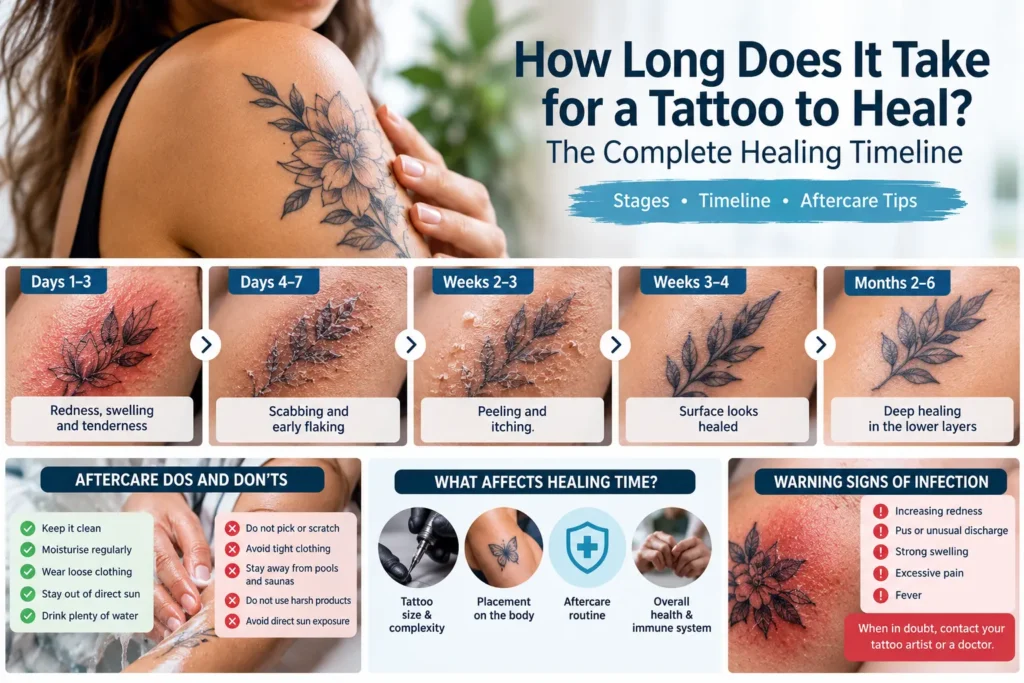
Before we get into the details, here is a quick overview of the healing timeline.
| Stage | Typical timeframe | What you will notice |
|---|---|---|
| Fresh wound stage | Days 1 to 3 | Redness, tenderness, mild swelling, clear or slightly coloured fluid |
| Oozing and early scabbing | Days 4 to 7 | Thin scabs or flaky patches, itching begins |
| Peeling and itching | Weeks 2 to 3 | Visible flaking, tightness, dull or cloudy look |
| Surface healed | Weeks 3 to 4 | Skin smooth again, colours look clearer |
| Deep healing | Months 2 to 6 | No visible change, but the lower skin layers finish repairing |
These ranges are averages. Your own experience may be a little faster or slower, and that is completely normal.
Why Does a Tattoo Take Time to Heal?
A tattoo is a controlled wound. During the session, a tattoo machine moves a needle up and down many times per second, depositing ink into the dermis, the layer of skin beneath the surface. The outer layer, the epidermis, is repeatedly punctured in the process.
Your body treats this the way it treats any other injury. It sends blood and immune cells to the area, closes the openings, and builds new skin. Because tattooing damages both the top layer and the layer below it, the repair job happens in stages. The top layer renews relatively quickly, which is why a tattoo can look healed within a few weeks. The deeper skin takes much longer to rebuild, which is why artists often say a tattoo is not truly healed until several months have passed.
This also explains why a tattoo can look and feel fine on the outside while still being sensitive to rough treatment, sun exposure, and harsh products beneath the surface.
The Tattoo Healing Stages, Week by Week
The surface of a tattoo usually looks healed after two to four weeks, while the deeper layers keep repairing for months.
Days 1 to 3: The Fresh Wound Stage
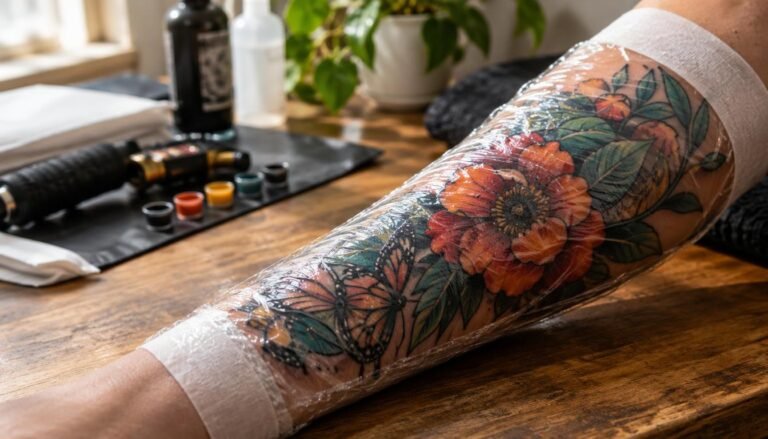
Right after your session, your artist will clean the area and cover it with a bandage or protective wrap. Different artists use different methods, such as a thin plastic wrap, a breathable adhesive film, or a gauze pad with tape, so always follow the instructions you were given.
During the first few days, you can expect:
- Redness around the tattoo, similar to a mild sunburn
- Warmth and tenderness when touched
- Slight swelling, especially on softer areas or near joints
- A little clear or tinted fluid, which is a mix of plasma, excess ink, and blood
This is the stage where careful hygiene matters most. Wash your hands before touching the tattoo, clean it gently as your artist advises, and avoid anything that could irritate or contaminate the area.
Small tattoos often settle down quickly during this stage. Because the treated area is minimal, there is less skin for your body to repair.
Days 4 to 7: Early Scabbing and Flaking
Around the end of the first week, the oozing slows down, and the tattoo begins to dry out. Thin scabs or flaky patches may start to form. The tattoo can look a little cloudy because a layer of dead skin and plasma is sitting over the ink.
Typical signs in this phase include:
- Light scabbing or a dry, tight feeling
- The start of itching
- A slightly dull appearance, especially on colour or fine details
- Less redness than in the first few days
The most important rule at this stage is simple: do not pick, scratch, or peel anything. Scabs and flakes protect the new skin underneath. Pulling them off early can lift ink out of the skin, leaving patchy spots or small gaps in the design. This matters even more for small and fine-line tattoos, where one missing patch is much more noticeable.
Weeks 2 to 3: Peeling and Itching
This is the stage that surprises most first-timers. The tattoo can look quite rough, with visible peeling that resembles the way skin flakes after a sunburn. You may also notice that the design looks faded or milky.
Do not panic. This is the old, damaged skin shedding to reveal the new layer underneath. The dull look is caused by the temporary layer of dead skin sitting above the ink, not by the ink itself disappearing.
To cope with the itch:
- Lightly pat or tap the area rather than scratching
- Apply a very thin layer of a fragrance-free moisturiser or the aftercare product your artist recommends
- Wear loose, breathable clothing so fabric does not rub the area
- Keep your nails away from the tattoo, even while sleeping if possible
The itching can feel intense, but it passes. Treat it as a sign that your skin is doing its job.
Weeks 3 to 4: The Surface Looks Healed
By the third or fourth week, most people find that peeling has finished and the skin feels smooth again. The colours and lines begin to look sharper, and the tattoo appears to sit naturally in the skin.
This is the point where many people consider their tattoo healed. And visually, that is a fair call. However, it is not the end of the story. The skin underneath is still strengthening, and the tattoo can look slightly shiny or tight for a little longer.
Months 2 to 6: Deep Healing
Once the surface looks normal, the lower layers of skin continue to repair and settle for several more weeks or months. You will not see much happening, and you do not need to keep a strict routine anymore, but good habits still help:
- Moisturise regularly to keep the skin supple
- Use sunscreen on the tattoo whenever it is exposed
- Stay hydrated and keep your general health in good shape
By about six months, the tattoo has usually reached its final look. This is also the right time to judge whether any area needs a touch-up.
Do Small Tattoos Heal Faster?
This is a very common question for anyone choosing a small design, and the answer is: usually, yes, but not always.
A tiny minimalist tattoo, such as a small symbol, a single word, or a simple outline, covers a very limited area of skin and involves far less needlework than a large piece. That generally means:
- Less irritation and swelling
- Less scabbing and peeling
- A shorter overall surface healing time, often closer to two weeks
But size is only one factor. A small tattoo placed on a finger, wrist, or ankle can heal more slowly than a bigger tattoo on the upper arm, simply because those areas bend, rub, and get exposed more often. Fine-line work can also look patchy during healing if it is picked at or irritated, so careful aftercare is still essential.
What Affects How Long a Tattoo Takes to Heal?
No two tattoos heal in the same way. Several factors decide whether yours falls near the short or long end of the timeline.
Size and Complexity
Larger tattoos and designs with heavy shading, solid fills, or lots of colour involve more trauma to the skin. They usually swell more, scab more, and need more time to settle.
Placement on the Body
Skin is not the same everywhere. Thicker, less mobile areas tend to recover more easily than thin, stretchy, or high-friction areas. We cover this in detail in the next section.
Your Skin Type and Health
Dry, oily, sensitive, and mature skin can all respond differently. People with conditions such as eczema, psoriasis, or certain allergies may find healing slower or more uncomfortable. General health matters too. Poor sleep, high stress, illness, and some medications can all affect how well your body repairs itself. If you have a medical condition or take regular medication, it is sensible to talk to a doctor before getting tattooed.
Quality of the Tattoo Work
A skilled artist who works with a steady hand and appropriate depth causes less unnecessary trauma. Overworked skin, where the same area is passed over too many times, tends to heal harder and may scar more easily.
Aftercare
How you treat the tattoo afterwards makes a huge difference. Keeping it clean, avoiding irritation, and protecting it from the sun all support smooth healing. Skipping aftercare, over-moisturising, or picking at scabs can add days or weeks to the process.
Lifestyle Habits
Smoking, heavy alcohol use, and poor hydration can slow healing. Sweating heavily, swimming, and soaking in baths can also introduce irritation or bacteria during the sensitive early period.
Healing Time by Body Location
Where your tattoo sits on your body has a big influence on how long it takes to heal. Here is a general guide.
| Body area | Typical healing experience |
|---|---|
| Upper arm, outer thigh, back | Often among the easiest areas. Thicker skin and less friction usually mean a smoother recovery |
| Forearm | Generally straightforward, though clothing rubbing against sleeves can irritate it |
| Wrist | Moves constantly and is often covered by watches or jewellery, so it can take a little longer |
| Fingers and hands | Frequent washing, bending, and use make healing slower and more likely to fade or blur |
| Feet and ankles | Friction from socks and shoes, plus swelling, can slow things down |
| Ribs and chest | Can be sore and slower because breathing and movement stretch the skin |
| Neck and behind the ear | Fairly delicate. Collars, hair, and jewellery can cause irritation |
| Inner arm and inner elbow | Thin skin and constant bending mean extra care is needed |
If you are choosing a spot for a small tattoo, think about your daily routine. A location that gets rubbed or washed a lot will need a little extra patience, and the result may need a touch-up.
Does Ink Colour or Style Change Healing Time?
The style of your tattoo can influence how it looks as it heals, and sometimes how long it takes.
- Fine-line and minimalist tattoos: These use thinner lines and less ink, so they often heal quickly. However, because the lines are delicate, any picking, rubbing, or sun exposure can cause patchiness or fading.
- Blackwork and heavy shading: Large areas of solid black or dense shading can cause more swelling and scabbing, so surface healing may take a bit longer.
- Colour tattoos: Colour packing can be more demanding on the skin. Some pigments, especially reds, are linked to occasional sensitivity or allergic reactions in some people.
- White ink: White and very light ink can look cloudy during healing and can heal unevenly. Results vary a lot from person to person.
Always ask your artist what to expect for your specific style and placement.
How to Care for a New Tattoo So It Heals Properly
Good aftercare is the best thing you can do to heal quickly and keep your tattoo looking sharp. The advice below is general. If your artist gives you specific instructions, follow those first.
Keep It Clean
After your artist tells you it is safe to remove the initial covering, wash your hands thoroughly, then gently clean the tattoo with lukewarm water and a mild, fragrance-free soap. Use clean fingertips, not a rough cloth or sponge. Rinse well and pat dry with a clean paper towel, or let the skin air dry.
Moisturise Lightly
Once the tattoo is dry, apply a very thin layer of an unscented moisturiser or the aftercare product recommended by your artist. A thin layer is enough. Too much product can clog the skin, trap moisture, and slow healing.
Let It Breathe
After the first dressing is off, loose and breathable clothing helps protect the area without trapping sweat. Avoid tight fabrics, straps, or anything that rubs back and forth over the tattoo.
Protect It From the Sun
UV light can fade ink and irritate healing skin. Keep a new tattoo out of direct sunlight, and cover it with clothing if you need to be outdoors. Once it is fully healed, apply a broad-spectrum sunscreen every time it is exposed. This is one of the best things you can do to keep a tattoo crisp for years.
Be Gentle With Your Body
Sleep well, drink plenty of water, and eat a balanced diet. Healing is a whole-body process, and giving your body what it needs makes a difference.
What to Avoid While Your Tattoo Is Healing
Some habits can slow healing or damage your tattoo, so try to avoid the following:
- Picking, scratching, or peeling scabs and flakes
- Soaking in baths, hot tubs, pools, lakes, or the sea until the surface has healed
- Direct sun and tanning beds
- Heavy sweating and intense workouts that cause friction on the area, especially in the first week or two
- Tight or rough clothing that rubs the tattoo
- Scented lotions, harsh soaps, alcohol-based products, and heavy ointments unless your artist specifically recommends them
- Shaving over the tattoo until it has fully healed
- Touching with unwashed hands
- Letting pets lick or rub against it
If you are planning travel, a beach holiday, or a big sports event soon, try to schedule your tattoo well in advance so you are not forced to risk the healing process.
What Is Normal and What Is Not
It can be hard to tell what is part of normal healing and what might be a problem, especially with your first tattoo.
Normal Signs
- Redness, warmth, and mild swelling in the first few days
- Clear or slightly coloured fluid early on
- Itching and tightness
- Light scabbing and flaking
- A cloudy or faded look during peeling
Warning Signs to Watch For
A tattoo is an open wound while it heals, so infection is possible. Pay attention to any of the following:
- Redness that spreads outward or gets worse after the first few days
- Pain that increases instead of easing
- Thick, cloudy, or foul-smelling discharge
- Swelling that keeps growing
- Red streaks leading away from the tattoo
- Fever, chills, or feeling generally unwell
- Raised, extremely itchy rashes or hives that appear in or around the tattoo
If you notice any of these, contact a doctor or other healthcare professional promptly. Do not wait it out, and do not treat a suspected infection on your own. You can also let your tattoo artist know, but medical advice should come from a healthcare provider.
How Do You Know When Your Tattoo Is Fully Healed?
You can generally consider the tattoo healed when:
- There are no scabs, flakes, or peeling skin left
- The skin feels smooth and no longer tender or tight
- The area is no longer red or swollen
- The tattoo does not look shiny, and the colours appear clear
- Touching or washing it no longer causes discomfort
Remember that surface healing and full healing are different. Even if everything looks perfect after three or four weeks, it can take longer for the skin underneath to settle completely. This is why many artists suggest waiting a few months before judging the final result or booking a touch-up.
Can You Make a Tattoo Heal Faster?
You cannot rush the biological process, but you can avoid slowing it down. Here is what actually helps:
- Follow your artist’s aftercare instructions closely
- Keep the area clean and gently moisturised
- Avoid sun, soaking, friction, and picking
- Sleep well and stay hydrated
- Avoid smoking and excess alcohol while you heal
- Choose a skilled, licensed artist who works hygienically
Be cautious about online “hacks” or miracle products that claim to heal a tattoo in days. If a method sounds too good to be true, it probably is.
Common Healing Mistakes (and How to Avoid Them)
Over-moisturising. Many people believe more cream means faster healing. In reality, a thick layer can suffocate the skin and cause breakouts or soggy scabs. Keep it thin.
Removing the dressing too soon or too late. Follow your artist’s timing. Taking a covering off early can expose raw skin, and leaving some types on for too long can trap moisture and bacteria.
Picking at scabs. It is tempting, but it is the quickest route to patchy ink and scarring.
Skipping sunscreen after healing. UV exposure is one of the biggest causes of faded tattoos. Make sunscreen part of your routine.
Going swimming too soon. Pools, oceans, and hot tubs carry bacteria and chemicals that can irritate or infect a healing tattoo.
Ignoring symptoms. If something feels wrong, get it checked. Early treatment of an infection or reaction is much easier than treating it once it has progressed.
Tips for Healing Small and Fine-Line Tattoos
Because our focus here at SmallTattoos.net is on delicate, minimal designs, here are a few extra tips for small pieces:
- Choose placement carefully. A tiny tattoo on a high-friction or frequently washed area, like the side of a finger, may fade or blur. Consider a more protected spot if longevity matters.
- Be extra gentle with fine lines. Thin lines have less ink to lose, so even slight trauma can leave gaps.
- Expect a touch-up possibility. Small tattoos sometimes need a quick touch-up after healing, especially on hands, feet, and fingers. This is normal and not a sign of poor work.
- Keep it out of the sun. Light, thin lines fade quickly without protection.
- Do not judge the tattoo too early. During peeling, a small tattoo can look faint or uneven. Wait until it has fully healed before deciding it needs fixing.
Frequently Asked Questions
How long does a tattoo take to heal on the surface?
Most tattoos heal on the surface in about 2 to 4 weeks. Small, simple designs often finish toward the earlier end of that range.
How long does a tattoo take to heal completely?
Full healing, including the deeper layers of skin, can take up to around 6 months. The tattoo can look finished long before then.
Is it normal for a tattoo to look faded while healing?
Yes. A cloudy or dull appearance is common during the peeling stage because a layer of dead skin covers the ink. The colour and sharpness usually return once the skin has finished renewing.
Why is my healing tattoo so itchy?
Itching is a very common part of healing. As the skin dries out, flakes, and renews itself, it can feel tight and itchy. Lightly patting the area and applying a thin layer of moisturiser can help. Avoid scratching.
Can I shower with a new tattoo?
Usually yes, as long as you keep it brief and follow your artist’s instructions. Avoid direct high-pressure water on the area, and do not soak it in baths, pools, or the sea until it has healed.
When can I exercise after getting a tattoo?
Light activity is often fine after a day or two, but heavy workouts that cause sweating, stretching, or friction on the tattooed area are best avoided for the first week or two. Your artist can give advice based on the placement.
When can I go swimming?
Most artists advise waiting until the tattoo has fully healed on the surface, which is typically around two to four weeks. Always check with your artist first.
Why is my tattoo peeling after a week or two?
Peeling is normal. It is the top layer of damaged skin shedding as new skin forms underneath. Let it come off naturally.
Do small tattoos hurt less during healing?
Often they do, since a smaller area means less irritation overall. But sensitivity depends more on placement and your own skin than on size alone.
Do I need a touch-up after my tattoo heals?
Sometimes. Small patches can heal unevenly, especially on hands, feet, ribs, or with fine-line and white ink work. Wait until the tattoo has fully healed, then speak to your artist. Many studios offer free or discounted touch-ups within a certain period.
How do I know if my tattoo is infected?
Worsening pain, spreading redness, thick or smelly discharge, heat, fever, or red streaks are all possible signs of infection. Contact a healthcare professional as soon as possible.
Final Thoughts
So, how long does it take for a tattoo to heal? Expect roughly two to four weeks for the surface to look and feel normal, and up to six months for the skin underneath to finish its work. Small tattoos tend to be quick and easy, but placement, skin type, and aftercare still play a big part.
The best approach is to be patient and gentle. Keep your tattoo clean, lightly moisturised, and protected from the sun, resist the urge to pick, and follow your artist’s advice. Do that, and your new ink should heal beautifully and stay crisp for years to come.
If you are still choosing your next piece, browse the ideas on SmallTattoos.net for minimal, meaningful designs that are easy to care for and look great once healed.
Disclaimer: This article is for general information only and does not replace professional medical advice. If you have concerns about your tattoo, a skin condition, or signs of infection, consult a qualified healthcare provider.
2 Comments